
20 Fun Forest Walk Activities for Kids
A forest walk can be so much more than a simple stroll through the trees. For children, the forest is a place full of adventure, mystery, and discovery. Every path hides something new to explore, from colorful leaves and fascinating insects to towering trees and hidden animal tracks.
The best part? You don’t need expensive equipment or detailed planning. With a little imagination, an ordinary walk can become an unforgettable outdoor experience.
Whether you’re heading out for an afternoon adventure, a weekend family outing, or simply looking for ways to encourage your children to spend more time outdoors, these fun forest activities will keep young explorers engaged and excited.
Why Forest Walks Are Great for Kids
Spending time in nature offers countless benefits for children. Forest walks encourage curiosity, creativity, observation skills, and physical activity. They also provide a wonderful opportunity for families to slow down, connect with each other, and appreciate the natural world.
Children naturally learn through exploration, and the forest is one of the best classrooms imaginable.
1. Go on a Nature Scavenger Hunt
Before your walk, create a simple list of things for your child to find.
Examples include:
- A pinecone
- A feather
- A yellow leaf
- A smooth stone
- Something that smells nice
- A flower
- A bird
Children love having a mission, and a scavenger hunt turns every step into an exciting search.
2. Play Forest Bingo
Create a bingo card filled with things commonly found in the woods.
Squares might include:
- Mushroom
- Squirrel
- Bird
- Acorn
- Fallen log
- Spider web
- Butterfly
The first person to complete a row wins.
3. Listen for Nature Sounds
Pause for a few minutes and ask everyone to stay completely quiet.
Can you hear:
- Birds singing?
- Leaves rustling?
- Insects buzzing?
- Wind moving through the trees?
This simple activity helps children become more aware of their surroundings and encourages mindfulness.
4. Search for Animal Tracks
Depending on the season and location, you may find footprints left by deer, rabbits, foxes, or other wildlife.
Bring a small notebook and draw the tracks you discover. Older children may enjoy looking up which animals made them when they get home.
5. Collect Natural Treasures
Give each child a small bag or basket and allow them to collect a few forest treasures.
They might gather:
- Pinecones
- Interesting leaves
- Fallen bark
- Small stones
- Acorns
Always remind children to leave living plants and animals undisturbed.
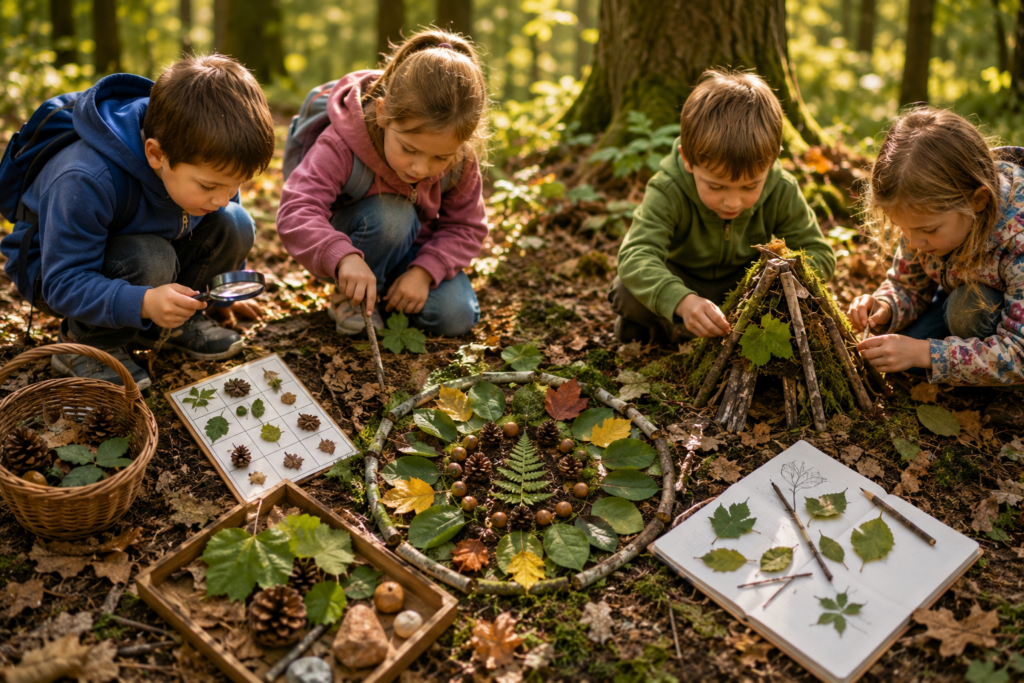
6. Build a Fairy House
Children love creating tiny homes for imaginary woodland creatures.
Using sticks, leaves, moss, stones, and pinecones, build a miniature fairy or woodland animal house beside the trail.
This activity encourages creativity and imaginative play.
7. Create Nature Art
Gather natural materials and arrange them into beautiful patterns on the forest floor.
Try making:
- Mandalas
- Hearts
- Animals
- Flowers
- Geometric shapes
Take a photo before leaving your artwork behind for others to discover.
8. Find Every Color of the Rainbow
Challenge your children to spot something in every color of the rainbow.
Red, orange, yellow, green, blue, and purple can all be found in nature if you look carefully enough.
This activity encourages observation and attention to detail.
9. Hug a Tree
It may sound silly, but children often love this activity.
Ask them to choose a tree and see if they can wrap their arms around it. Then encourage them to notice:
- The texture of the bark
- The size of the trunk
- The smell of the wood
Every tree is unique.
10. Follow a Stick Adventure
Each child finds a special walking stick at the beginning of the walk.
The stick becomes part of the adventure:
- A wizard’s wand
- A knight’s sword
- A hiking staff
- A treasure hunter’s tool
Simple objects often inspire the best imaginative play.
11. Look for Shapes in Nature
Can you find:
- A heart-shaped leaf?
- A tree that looks like a letter?
- A cloud shaped like an animal?
- A rock shaped like a face?
This game helps children view nature in creative new ways.
12. Become Nature Detectives
Choose one object and investigate it closely.
Perhaps it’s a mushroom, a leaf, or a pinecone.
Ask questions such as:
- What does it feel like?
- What color is it?
- What animals might use it?
- How did it get here?
Curiosity is one of the greatest gifts nature can inspire.
13. Balance on Fallen Logs
Many forests contain fallen tree trunks that make perfect natural balance beams.
Challenge children to carefully walk from one end to the other while maintaining their balance.
Always supervise and ensure the log is safe.
14. Spot Birds and Insects
Bring binoculars if you have them.
See how many different creatures you can spot:
- Birds
- Butterflies
- Beetles
- Ants
- Dragonflies
A simple observation game can keep children entertained for a surprisingly long time.
15. Tell a Forest Story
Take turns adding one sentence to an ongoing story.
For example:
„Once upon a time, a squirrel discovered a hidden treasure…“
Each family member adds a new part as you walk.
The results are often hilarious and memorable.
16. Make a Nature Alphabet
Challenge children to find something for every letter of the alphabet.
Examples:
- A for Acorn
- B for Bark
- C for Cone
Older children may enjoy seeing how many letters they can complete.
17. Play „I Spy“
The classic game works perfectly in the woods.
„I spy with my little eye something green.“
Children must guess the object before it’s revealed.
18. Photograph Forest Discoveries
If your child enjoys photography, let them take pictures of interesting things they find.
They might photograph:
- Flowers
- Tree bark
- Mushrooms
- Insects
- Sunlight through the trees
Later, create a simple nature journal using the photos.
19. Search for Tiny Worlds
Get down low and explore the forest from an insect’s perspective.
Look closely at:
- Moss
- Tree roots
- Fallen logs
- Leaf piles
Children often discover fascinating miniature ecosystems they would otherwise miss.
20. End with a Forest Treasure Journal
After your walk, encourage children to draw or write about their favorite discovery.
They can include:
- Things they saw
- Animals they found
- Questions they still have
- Photos or sketches
Over time, these journals become wonderful keepsakes of family adventures.
Final Thoughts
A forest walk doesn’t need elaborate plans or expensive activities to be memorable. Often, the most meaningful moments come from simple discoveries—a colorful leaf, a hidden bird’s nest, or an imaginative story shared along the trail.
The next time you head into the woods with your children, slow down, look closely, and let curiosity lead the way. You may be surprised by how much adventure can be found among the trees.