
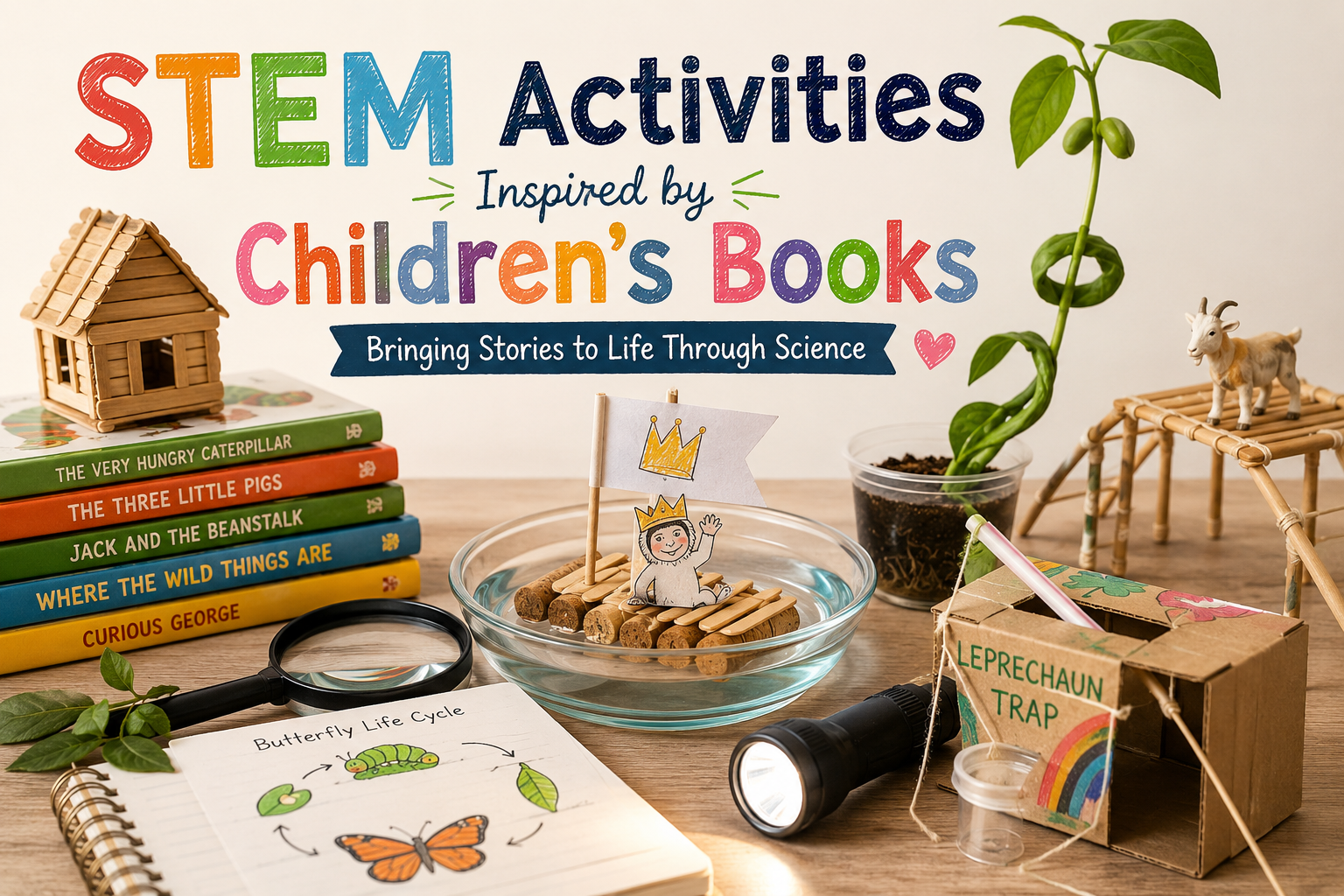
STEM Activities Inspired by Children’s Books: Bringing Stories to Life Through Science
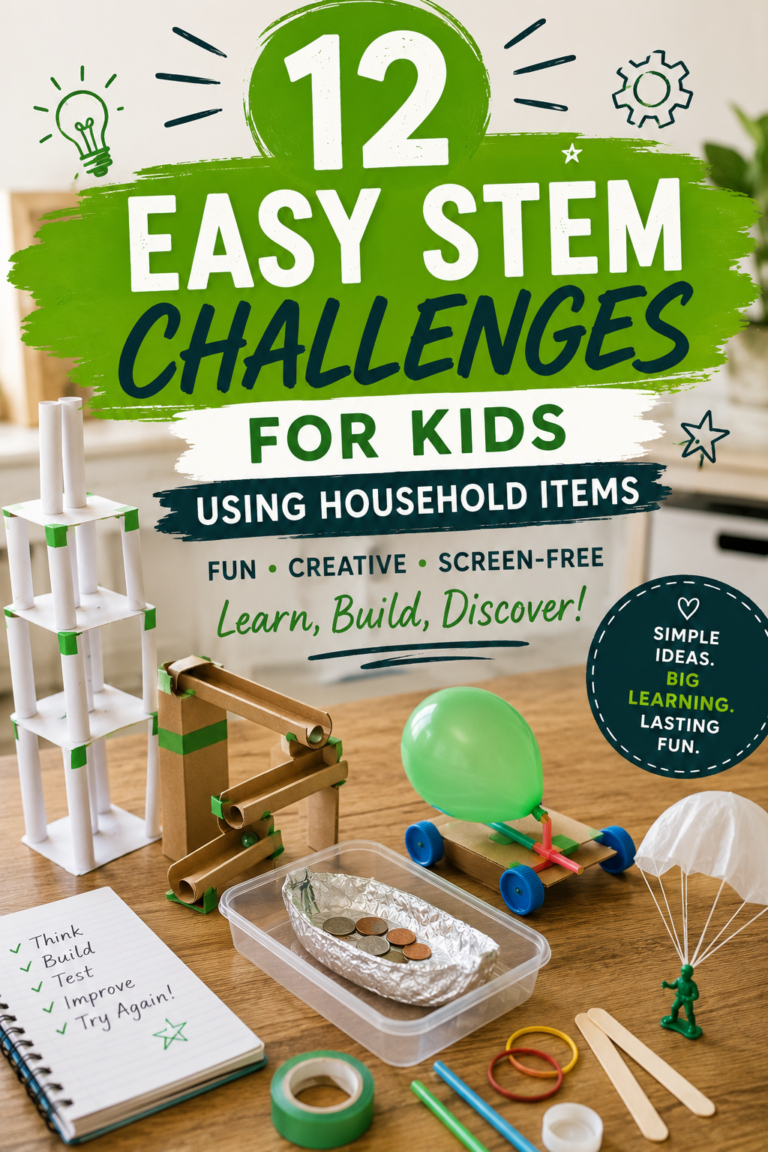
Reading a wonderful children’s book is just the beginning of an adventure. What if kids could step inside the story and become scientists, engineers, and explorers themselves?
STEM activities (Science, Technology, Engineering, and Math) inspired by books help children develop creativity, critical thinking, and problem-solving skills while deepening their understanding of the stories they love.
Whether you’re a parent, homeschooler, teacher, or caregiver, these book-inspired STEM challenges are easy to set up and packed with learning opportunities.
Why Combine Books and STEM?
When children connect hands-on activities with stories, they:
- Improve reading comprehension
- Build problem-solving skills
- Develop curiosity and creativity
- Learn scientific concepts in a fun way
- Stay engaged longer than with worksheets alone
The best part? Many activities can be completed using simple household materials.
1. Build a House That Can Withstand the Big Bad Wolf
Inspired by:
The Three Little Pigs
STEM Focus:
Engineering and Design
Materials:
- Drinking straws
- Popsicle sticks
- LEGO bricks
- Paper
- Tape
- Small fan or hair dryer
Challenge:
Can your child build a house strong enough to withstand the wolf’s huffing and puffing?
Instructions:
- Build several small houses using different materials.
- Test each structure with a fan.
- Observe which design survives best.
- Discuss why some materials performed better than others.
STEM Questions:
- Which house was strongest?
- How did the shape affect stability?
- What would you improve in the next design?
2. Design a Raft for Max and His Wild Things
Inspired by:
Where the Wild Things Are by Maurice Sendak
STEM Focus:
Buoyancy and Engineering
Materials:
- Aluminum foil
- Craft sticks
- Corks
- Rubber bands
- Toy figures
- Container of water
Challenge:
Build a raft that can carry Max safely across the ocean.
Instructions:
- Create a raft using available materials.
- Place it in water.
- Add small weights or toys.
- Count how much weight it can hold before sinking.
STEM Questions:
- Why do some objects float?
- How can you increase the raft’s carrying capacity?
- Which design worked best?
3. Create a Butterfly Habitat
Inspired by:
The Very Hungry Caterpillar by Eric Carle
STEM Focus:
Life Science
Materials:
- Journal or notebook
- Magnifying glass
- Local plant guide
- Camera (optional)
Challenge:
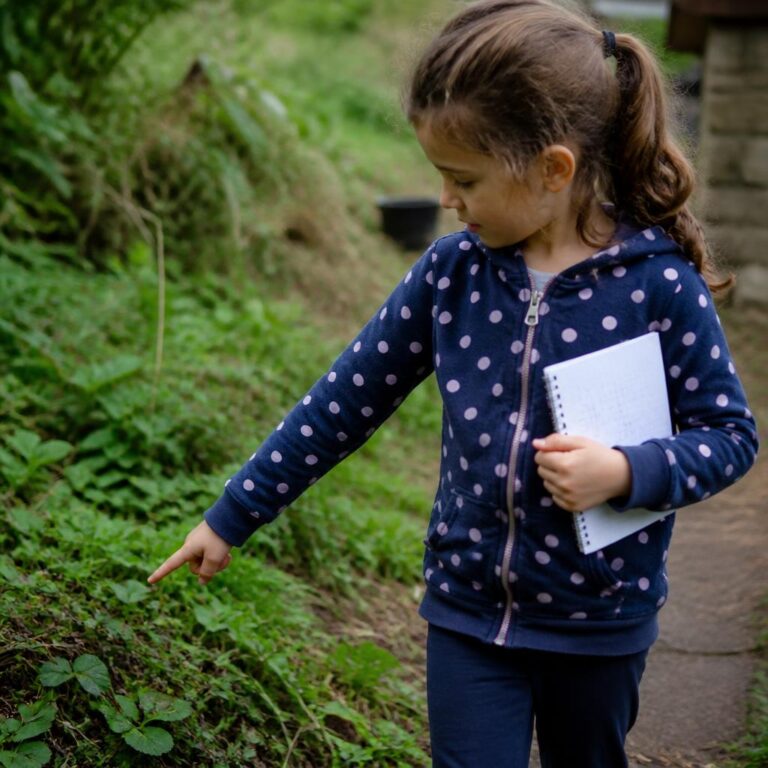
Investigate butterflies and their habitats.
Instructions:
- Observe butterflies in your garden or local park.
- Identify plants they visit.
- Draw or photograph your observations.
- Create a simple butterfly journal.
STEM Questions:
- What flowers attract butterflies?
- Why are pollinators important?
- What stages make up a butterfly’s life cycle?
4. Build a Bridge for the Billy Goats
Inspired by:
The Three Billy Goats Gruff
STEM Focus:
Engineering
Materials:
- Craft sticks
- String
- Tape
- Cardboard
- Small toy animals
Challenge:
Construct a bridge strong enough for all three goats.
Instructions:
- Design a bridge.
- Test it with toy animals or small weights.
- Improve the design after each test.
STEM Questions:
- What makes a bridge strong?
- Which shapes distribute weight effectively?
- How can engineers improve bridge designs?
5. Grow Jack’s Giant Bean Plant
Inspired by:
Jack and the Beanstalk
STEM Focus:
Botany
Materials:
- Bean seeds
- Clear plastic cup
- Paper towel
- Water
Challenge:
Observe how a bean seed grows.
Instructions:
- Place a damp paper towel inside the cup.
- Position a bean seed against the side.
- Keep the towel moist.
- Record growth each day.
STEM Questions:
- What does a seed need to grow?
- Which part appears first: roots or leaves?
- How quickly does the plant grow?
6. Engineer a Trap for a Leprechaun
Inspired by:
How to Catch a Leprechaun
STEM Focus:
Engineering Design Process
Materials:
- Cardboard
- Tape
- String
- Paper cups
- Recyclable materials
Challenge:
Build a trap that could catch a sneaky leprechaun.
Instructions:
- Plan the design.
- Build a prototype.
- Test moving parts.
- Improve the trap after testing.
STEM Questions:
- What worked?
- What failed?
- How could the design be improved?
7. Explore Shadows and Light
Inspired by:
Bear Shadow by Frank Asch
STEM Focus:
Physics
Materials:
- Flashlight
- Toys
- White paper
Challenge:
Investigate how shadows change.
Instructions:
- Shine a flashlight on objects.
- Move the light closer and farther away.
- Trace different shadow shapes.
STEM Questions:
- Why do shadows change size?
- How does light travel?
- What happens when multiple lights are used?
8. Design a Boat for Curious George
Inspired by:
Curious George
STEM Focus:
Engineering and Buoyancy
Materials:
- Aluminum foil
- Plastic containers
- Straws
- Tape
Challenge:
Build a boat that can hold the most pennies.
Instructions:
- Design a floating boat.
- Place it in water.
- Add pennies one by one.
- Record the maximum number held.
STEM Questions:
- Why did some boats sink sooner?
- How does shape affect floating?
- Which design carried the most weight?
Tips for Successful Book-Inspired STEM Activities
- Let children make mistakes and redesign.
- Ask open-ended questions.
- Focus on exploration rather than perfection.
- Encourage drawing and recording observations.
- Connect discoveries back to the story.
Remember: the goal isn’t just building something that works. It’s helping children think like scientists, engineers, and inventors.
Final Thoughts
Books spark imagination, and STEM activities turn imagination into action. By combining stories with hands-on experiments, children learn that science and engineering are all around them—even inside their favorite books.
The next time you finish a story together, ask one simple question:
„What challenge from this book could we solve ourselves?“
You might be surprised where that question leads.