

The Ultimate Guide to Fine Motor Activities for Preschoolers
Why Fine Motor Skills Are the Foundation for Future Success
When we think about preparing our children for school, we often focus on the big milestones: counting to ten, recognizing colors, or reciting the alphabet. But did you know that the true secret foundation for all of these academic skills starts in the tiny muscles of your child’s hands and fingers?
Fine motor skills involve the coordination of small muscles in movements involving the hands, wrists, and fingers. For a preschooler (ages 3–5), these skills are the building blocks for everyday independence—like buttoning a jacket, tying shoes, and using a spoon—as well as future academic achievements like writing, drawing, and using scissors.
The great news? Developing these crucial skills doesn’t require boring worksheets or flashcards. In fact, the absolute best way for young children to strengthen their hands is through playful, hands-on activities. In this guide, we will explore why fine motor skills are so vital, the science behind them, and actionable activities you can set up today.
The Science: Gross vs. Fine Motor Development
Before we dive into the activities, it is helpful to understand how your child’s motor system develops. There is a simple rule in child development: Gross motor skills always precede fine motor skills.
- Gross Motor Skills: These involve the large muscles of the body for big movements, such as running, jumping, and climbing.
- Fine Motor Skills: These involve the small muscles working in sync with the brain and nervous system.
Why does this matter? Children need a strong core and stable shoulders (gross motor) to act as an „anchor“ for their hands and fingers. If a child hasn’t developed stable shoulders yet, their hands will struggle to control a pencil. That’s why playground climbing, crawling, and hanging from monkey bars are actually vital „training sessions“ for future handwriting!
Why Fine Motor Development Matters in Preschool (Ages 3–5)
Between the ages of three and five, a child’s hand dexterity grows exponentially. Strong fine motor skills directly impact three main areas:
- Handwriting Readiness: Holding a pencil requires a mature „pincer grasp“ (thumb and index finger working together). Without strong finger muscles, children experience hand fatigue quickly, which can lead to frustration when they start drawing or writing.
- Self-Help Independence: The ability to zip coats, open lunchboxes, and buckle car seats relies heavily on finger strength and hand-eye coordination.
- Cognitive Growth: Manipulating small objects stimulates brain development, improves spatial awareness, and fosters early problem-solving skills.
7 Engaging Fine Motor Activities You Can Set Up Today
Here are our absolute favorite, play-based activities designed to target hand strength, dexterity, and pincer grasp without feeling like „learning.“ We’ve designed these to be simple, but highly effective for developing those specific finger muscles.
1. The Classic Play-Doh Gym
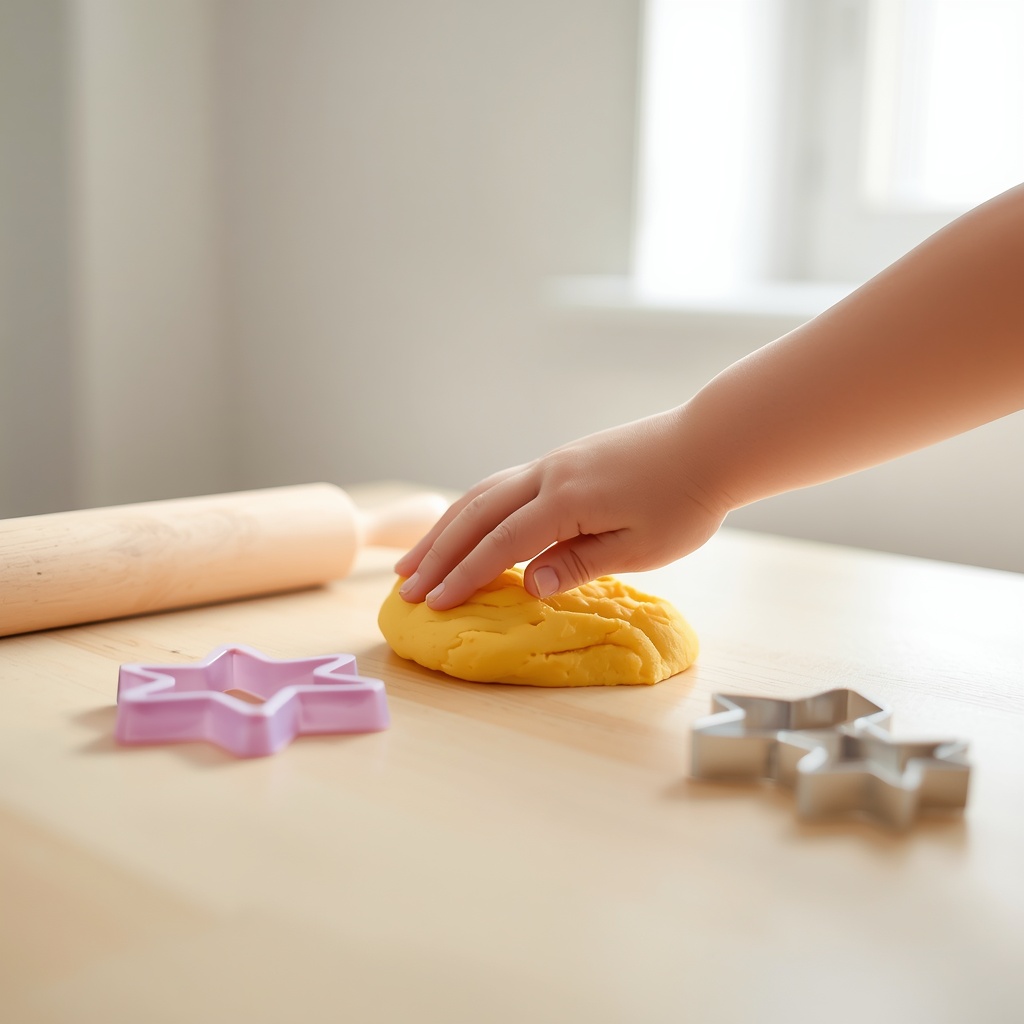
Play-dough is the ultimate fine motor tool disguised as pure fun. When children roll, flatten, pinch, and squeeze dough, they are building essential hand strength and resistance.
- Target Muscles: Squeezing builds palm strength, while pinching and rolling small „peas“ of dough targets the pincer grasp (thumb and index finger).
- Pro-Tip: For 3-year-olds, focus on rolling „snakes.“ For 5-year-olds, challenge them to use plastic tools to carve shapes into the dough.
- Product Recommendation: To take this to the next level, I highly recommend the Play-Doh Kitchen Creations Deluxe Tool Set. It comes with dozens of rollers, cutters, and extruders that force children to use different parts of their hands to manipulate the dough, providing a much better „workout“ than just using hands alone.
2. Pom-Pom Drop and Tweeze
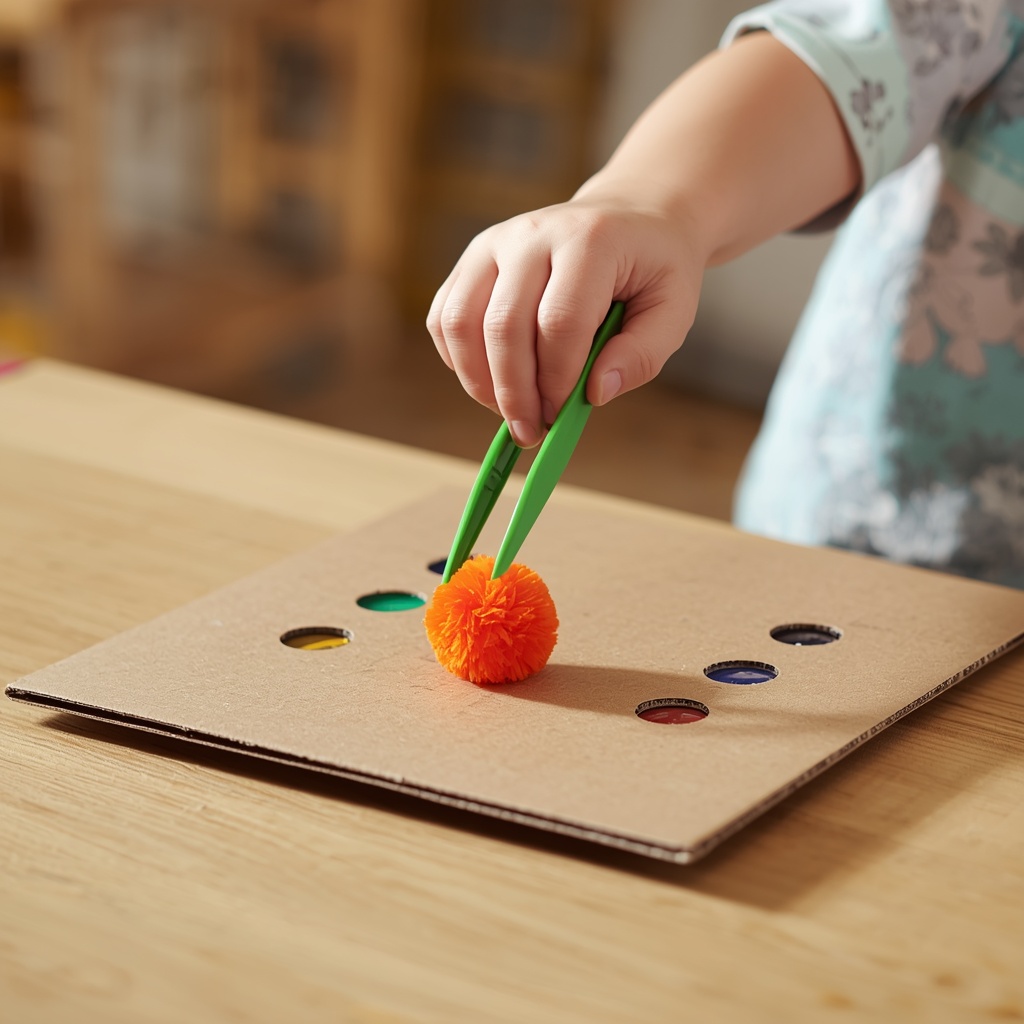
Pincer grasp development is the holy grail for holding a pencil later on. This activity trains the exact muscles needed for the „three-finger grip“ (tripod grasp).
- Target Muscles: The pincer grasp (thumb and index finger). This is the foundation for controlled pencil movement.
- How to play: Take an empty cardboard box, cut small holes in the top, and let your child push colorful pom-poms through. To level up for older preschoolers, provide child-safe plastic tweezers to pick up the pom-poms and place them into an ice cube tray.
- Product Recommendation: A set of Learning Resources Handy Scoopers or Jumbo Tweezers is an absolute must-have in any preschool home-learning toolkit. They are sized perfectly for small hands and provide the right amount of resistance to strengthen those tiny finger muscles effectively.
3. Sticker Peeling and Sticking
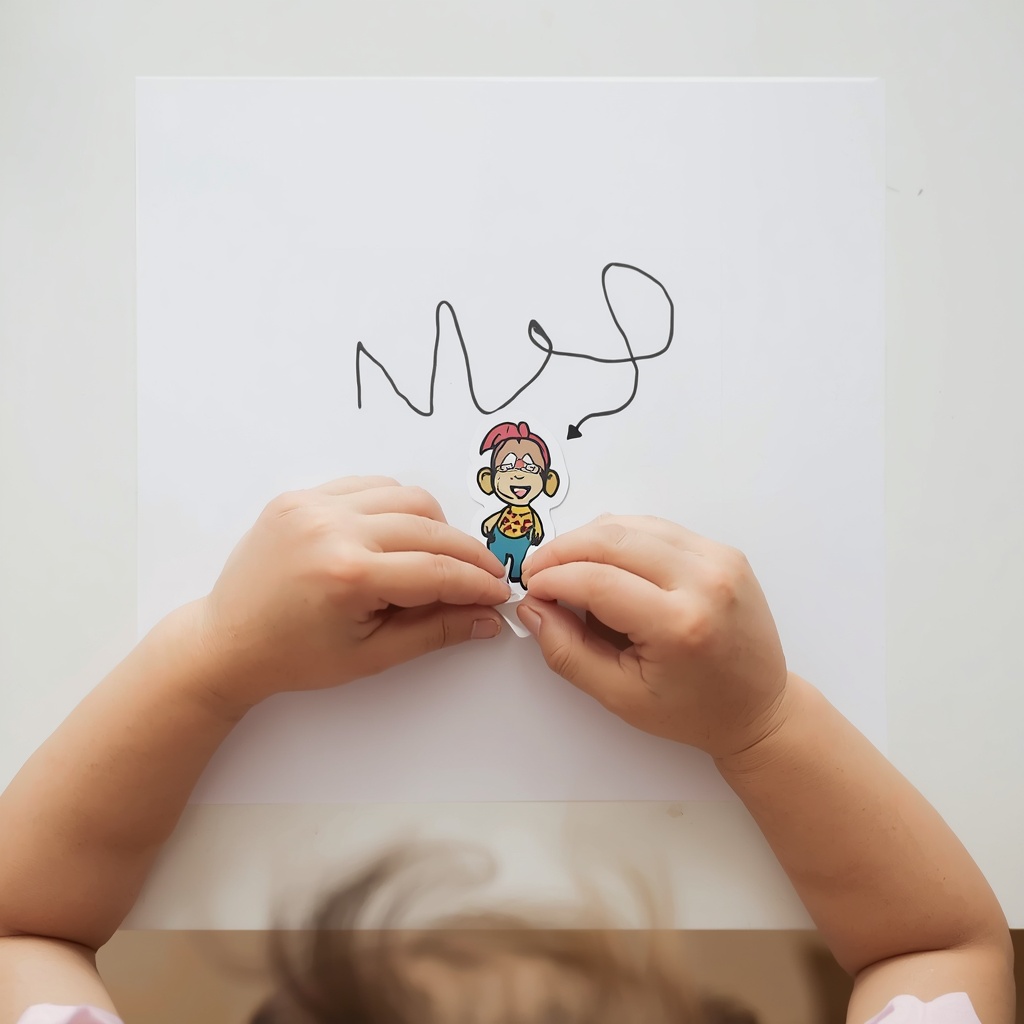
It sounds simple, but peeling a sticker off a glossy sheet is a complex task. It requires incredible fine motor precision, bilateral coordination (using both hands differently), and visual-motor integration.
- Target Muscles: Finger dexterity and coordination.
- How to play: Draw a simple line or shape on a piece of paper and challenge your child to place stickers directly on the line. The act of „peeling“ is where the magic happens!
- Product Recommendation: To keep them engaged longer, I love using Melissa & Doug Reusable Sticker Pads. Unlike regular stickers, these can be peeled and re-stuck multiple times, which means triple the fine motor practice for every single sticker!
4. Cutting Practice with Safety Scissors
Using scissors is a milestone because it requires „bilateral coordination“—the hands must do two different things at once: one hand holds the paper and steers, while the other hand opens and closes the scissors.
- Target Muscles: Hand opening/closing coordination and forearm stability.
- How to play: Start by letting them snip thin strips of paper or play-dough „snakes.“ Once they master that, move on to cutting along straight lines, and eventually, curvy lines or simple shapes.
- Product Recommendation: Ensure you use truly kid-safe scissors that cut paper easily but are designed not to cut hair or skin, such as the Burvagy Safety Scissors Set.
5. Beading and Lacing
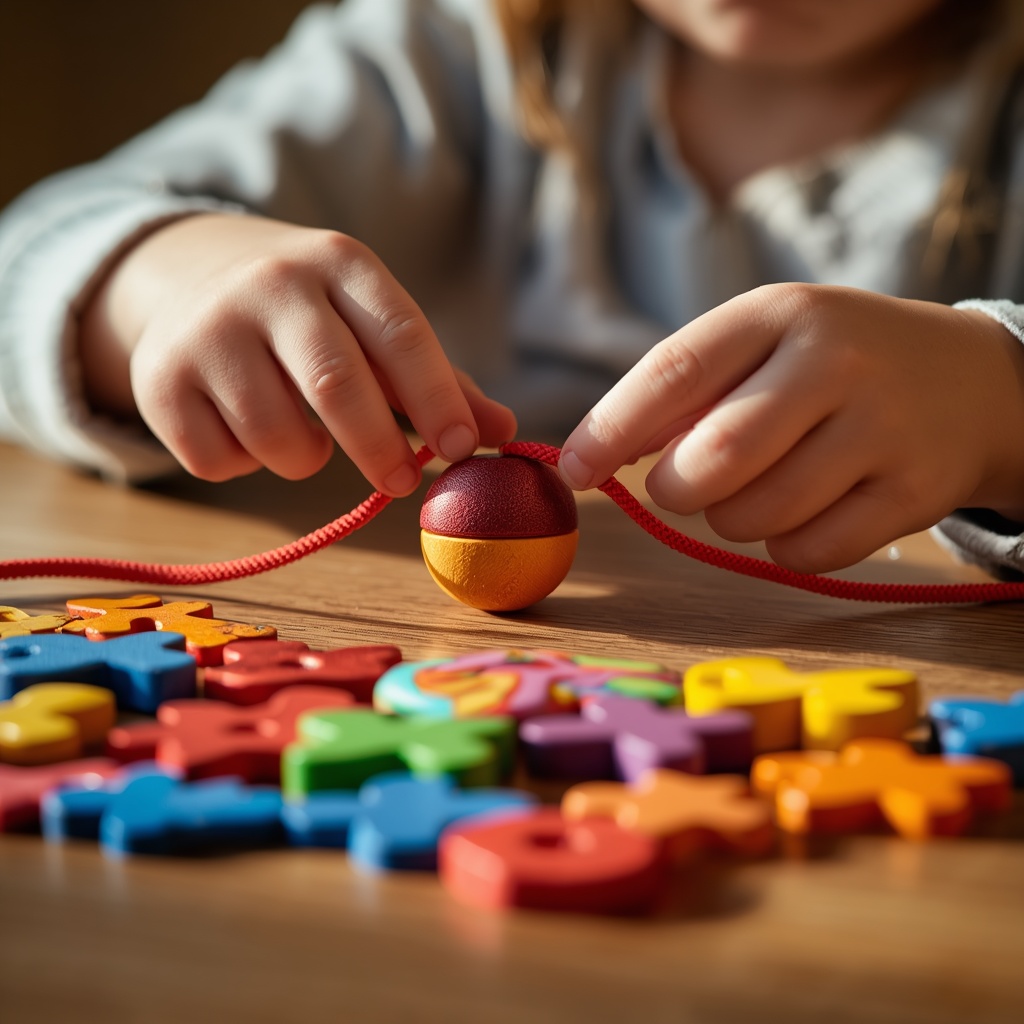
Lacing large beads onto a string or using lacing cards requires focus, bilateral coordination, and deep concentration.
- Target Muscles: Wrist stability and finger-eye coordination.
- How to play: Start with large wooden beads and thick, stiff-tipped shoelaces. As their dexterity improves, you can challenge them with smaller beads or even pasta tubes (like rigatoni) on pipe cleaners.
- Product Recommendation: The Melissa & Doug Wooden Lacing Beads Set is fantastic for building finger-eye coordination and introduces pattern recognition, which is a great bonus for early math skills.
6. Q-Tip Painting (Dot Art)

Ditch the thick paintbrushes for a day and trade them for cotton swabs! The thin shaft of a Q-tip perfectly mimics the tripod grasp needed for writing.
- Target Muscles: Precision and the „tripod grasp“ (thumb, index, and middle finger).
- How to play: Print out a picture with empty circles and have your child dip a Q-tip into paint to „fill in the dots.“
- Product Recommendation: Combine this with a set of washable, vibrant paints like the Crayola Washable Paint Pots for mess-free creative time.
7. Tongs and Treasure Rescue
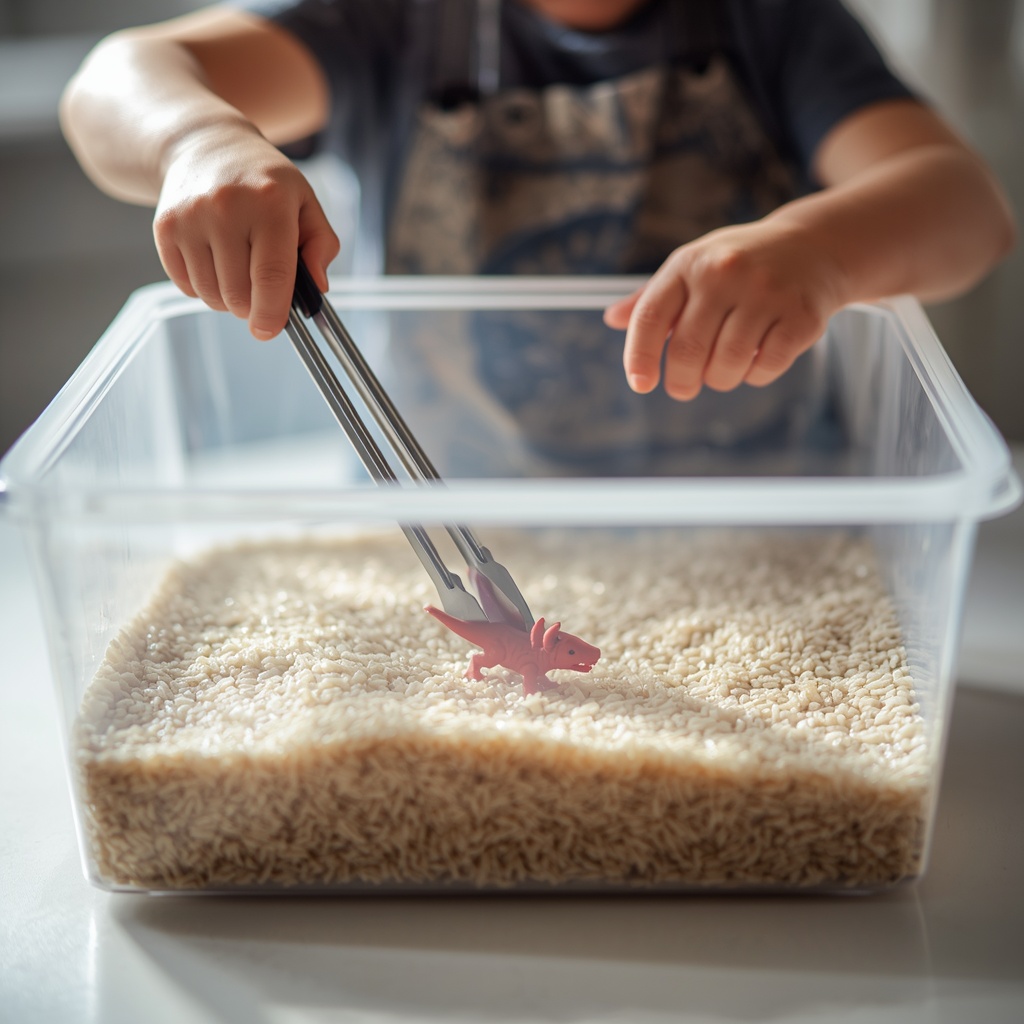
Turn snack time or toy cleanup into a „rescue mission.“ Using tongs is a heavy-duty workout for the muscles that will later control a pencil.
- Target Muscles: Hand strength and resistance training.
- How to play: Put small plastic toys into a shallow tray of water or a bowl of dry rice. Challenge your child to „rescue“ the items using kitchen tongs or ice tongs.
Tips for Success: Keeping It Fun and Low-Pressure
Parents often ask how to keep children motivated. Here are three simple rules:
- Keep it short: Preschoolers have short attention spans. 5 to 10 minutes of focused play is often enough to make a difference.
- Let them lead: If they want to use the tongs to „feed“ a stuffed animal instead of sorting items, let them! The goal is simply to get their hands working.
- Celebrate the process: Avoid worrying about how neat the final result looks. If they tried to cut on the line, that’s a success!
Conclusion: Small Hands, Big Futures
Developing fine motor skills doesn’t require expensive gadgets. By incorporating these simple, play-based activities into your daily routine, you are giving your preschooler the strength, confidence, and coordination they need for school and beyond.
What is your child’s favorite fine motor activity at home? Let us know in the comments below!
Disclosure: This post contains affiliate links. As an Amazon Associate, I earn from qualifying purchases at no extra cost to you.