
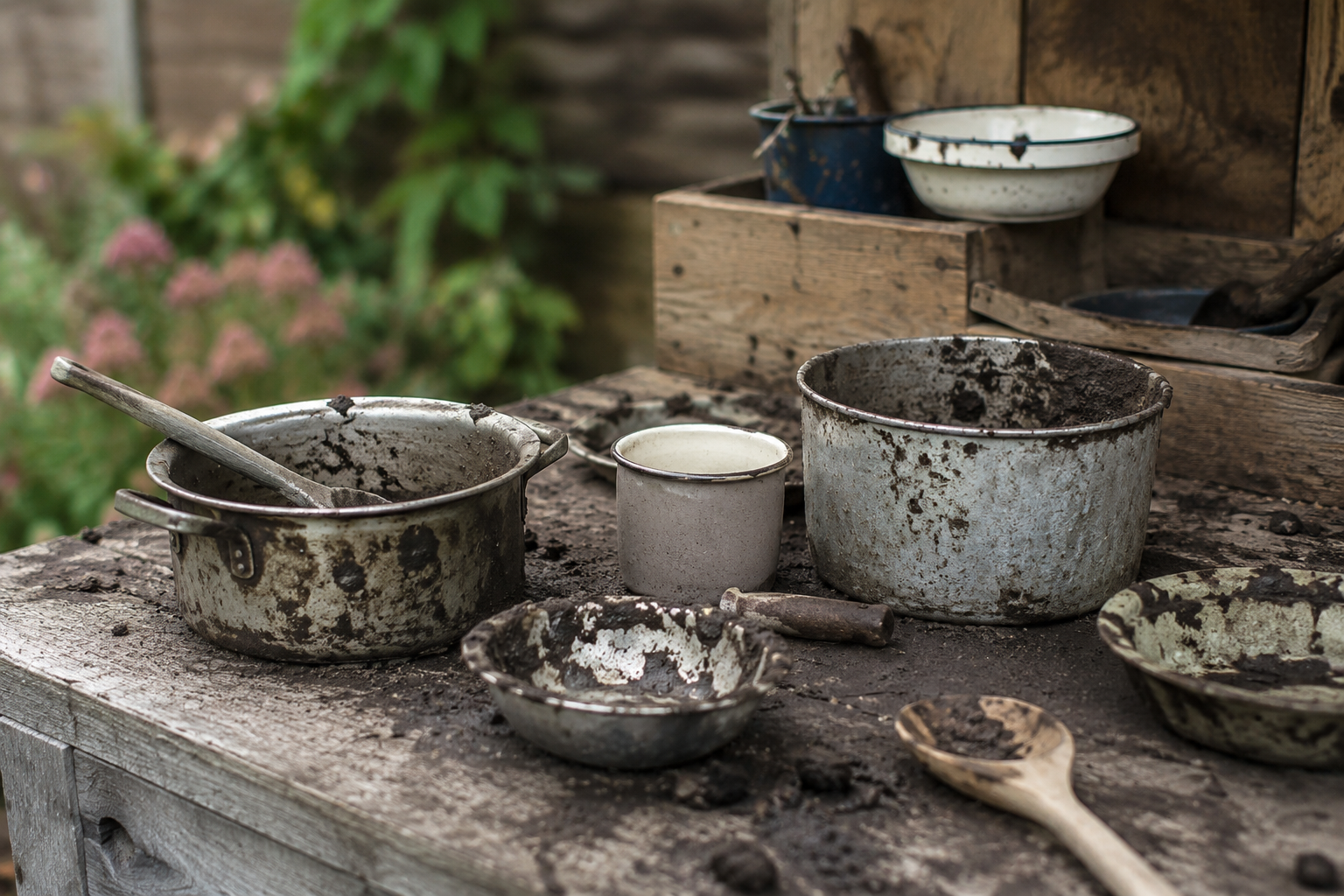
The Mud Kitchen Manifesto: Why Your Child Needs Dirt (Starting Today)
Do you know the greatest paradox of modern parenting? We spend a fortune on „pedagogically valuable“ wooden toys, invest hours into perfectly organizing nurseries, and try to minimize every possible sensory overload—only for our children to be happiest when they’re standing in the garden with an old wooden spoon and a heap of mud.
Let’s clear up a myth today: Your child doesn’t need a high-end mud kitchen from the hardware store that looks like a miniature version of your own kitchen.
Your child needs an invitation. A promise that it’s okay to get dirty today. And that is exactly where the „Mud Kitchen Manifesto“ comes into play.
Why „Dirt“ is Actually „Gold“
Before we build, let’s take a moment: Why is mud so valuable? Mud is unpredictable. It changes. It dries, it flows, it sticks. While your child is „cooking,“ a massive learning process is happening in their brain:
- Physics in action: „What happens when I pour too much water into the sand?“
- Sensory integration: The texture of wet sand is a soothing balm for the nervous system, especially after a long, structured day.
- Stress relief: Research shows that contact with natural materials (and the harmless bacteria in the soil) strengthens the immune system and lowers cortisol levels in children. Mud play is essentially meditation for kids.
What You Really Need (The „Low-Cost“ Check)
Forget the expensive garden play sets. Go into your kitchen, open the cupboard you’ve been meaning to declutter for ages, and pull out the following:
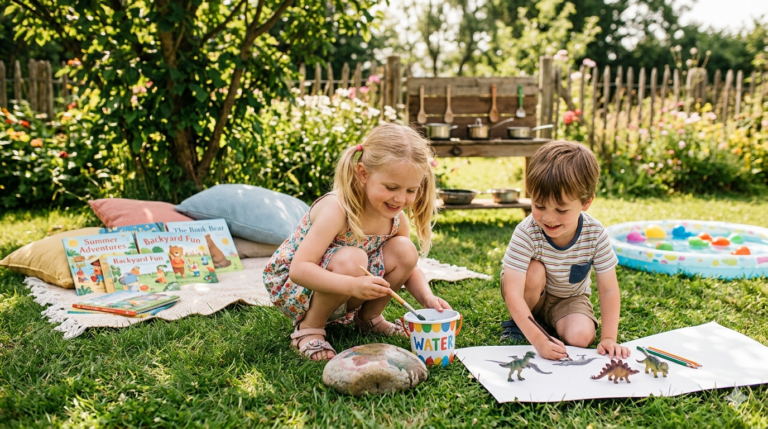
- 2-3 old pots or pans: The ones you retired after your last move.
- Old wooden spoons and whisks: Plastic works too, but wood feels better.
- A few empty yogurt cups or plastic bowls: For measuring and pouring.
- A bucket of water: This is the most important ingredient.
- The „Kitchen Counter“: An old crate, a small upturned table, or just a flat spot on the lawn. That’s it.
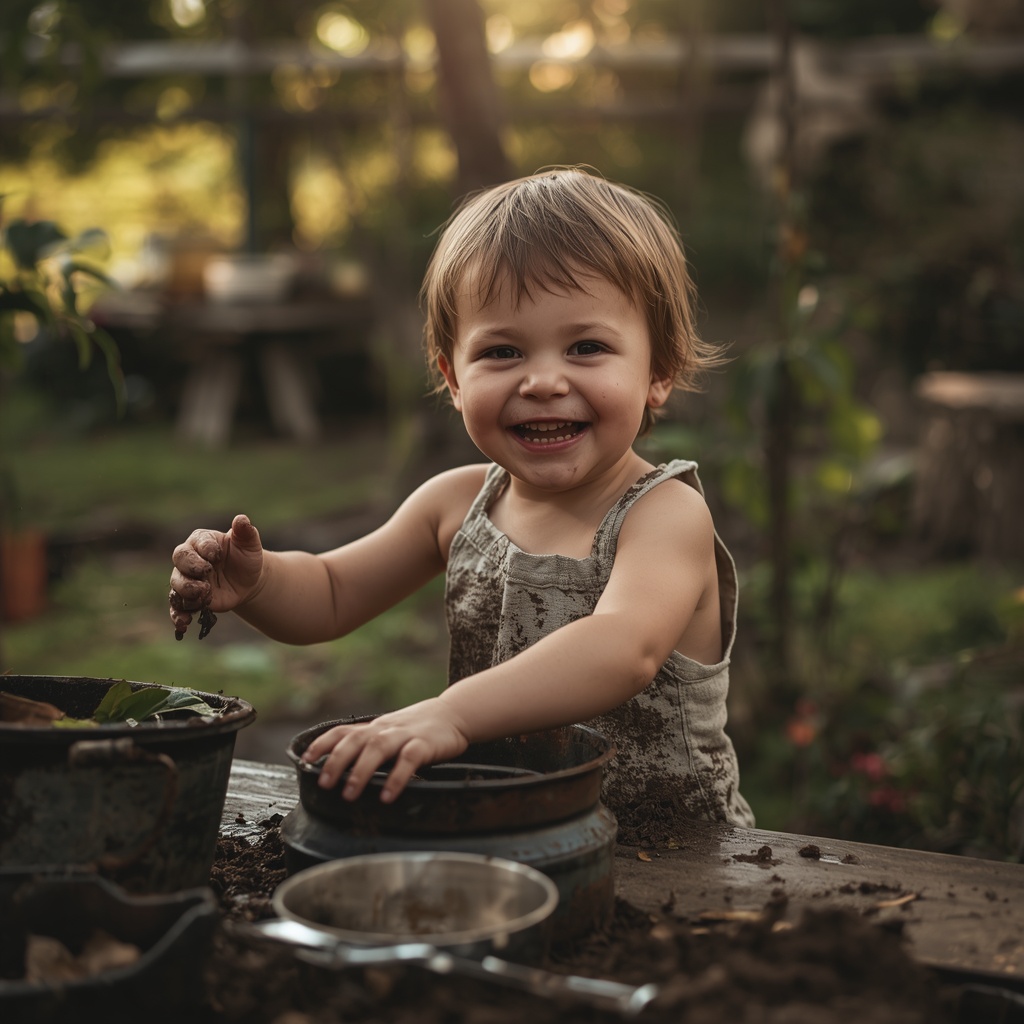
The 5-Minute Installation: Step by Step
- Choose the „Dirty Spot“: Find a corner in the garden, on the balcony, or (with a large plastic tarp!) even on the patio, where mud won’t cause trouble.
- The Hardware Station: Place the pots on the counter. Lay the spoons next to them. Give the setup a structure that looks like a kitchen, but isn’t one.
- The „Ingredient“ Source: Put the bucket of water within reach. If you have dirt or sand nearby: perfect. If not, a bag of topsoil from the garden center is your best friend.
- The Open Invitation: This is the most important step. Walk over, pick up a spoon, make the first „soup“ out of water and dirt, and say: „I think the forest needs lunch today. Will you help me?“
- Step Back: This is the hardest part for us parents. Stay close, but don’t play with them. Let them do it.
My Pro-Tip Against the „Mess“ Anxiety
I know exactly what you’re thinking: „And who cleans up the whole mess?“
Here is my solution:
- The „Mud-Outfit“: We have a fixed rule: „Muddy clothes stay outside.“ Everything that goes into the mud kitchen must be a pair of rain pants or old clothes.
- The „Airlock“ System: Lay an old blanket or towel directly in front of the mud kitchen. When playtime is over, you collect the pots, shake out the blanket—done.
- Accept the Chaos: A mud kitchen isn’t a tidy room. It should look wild. If you let go of the need for perfection, the „mess“ suddenly becomes a place of freedom.
Today is your day. Go outside, sacrifice an old wooden spoon, and watch as a bit of dirt and water turns into hours of deep, immersive play. Your child will thank you—and you’ll get to enjoy the peace while you sip your coffee nearby.
How about you? Do you have a „mud corner,“ or is the garden still a „no-go area“ for sludge? Let me know in the comments what has held you back so far!