
15 Screen-Free Boredom Busters for Kids Using Things You Already Have at Home
When kids say “I’m bored,” it often feels like you need to step in immediately. But boredom isn’t the enemy—it’s usually the beginning of creativity.
The best part? You don’t need new toys, apps, or structured activities. Most of the time, the most engaging play comes from simple household objects and a bit of space to experiment.
Here are 15 screen-free ideas, each with a bit more depth so you can actually see how they unfold in real life.
1. Build a Blanket Fort That Becomes a Whole World
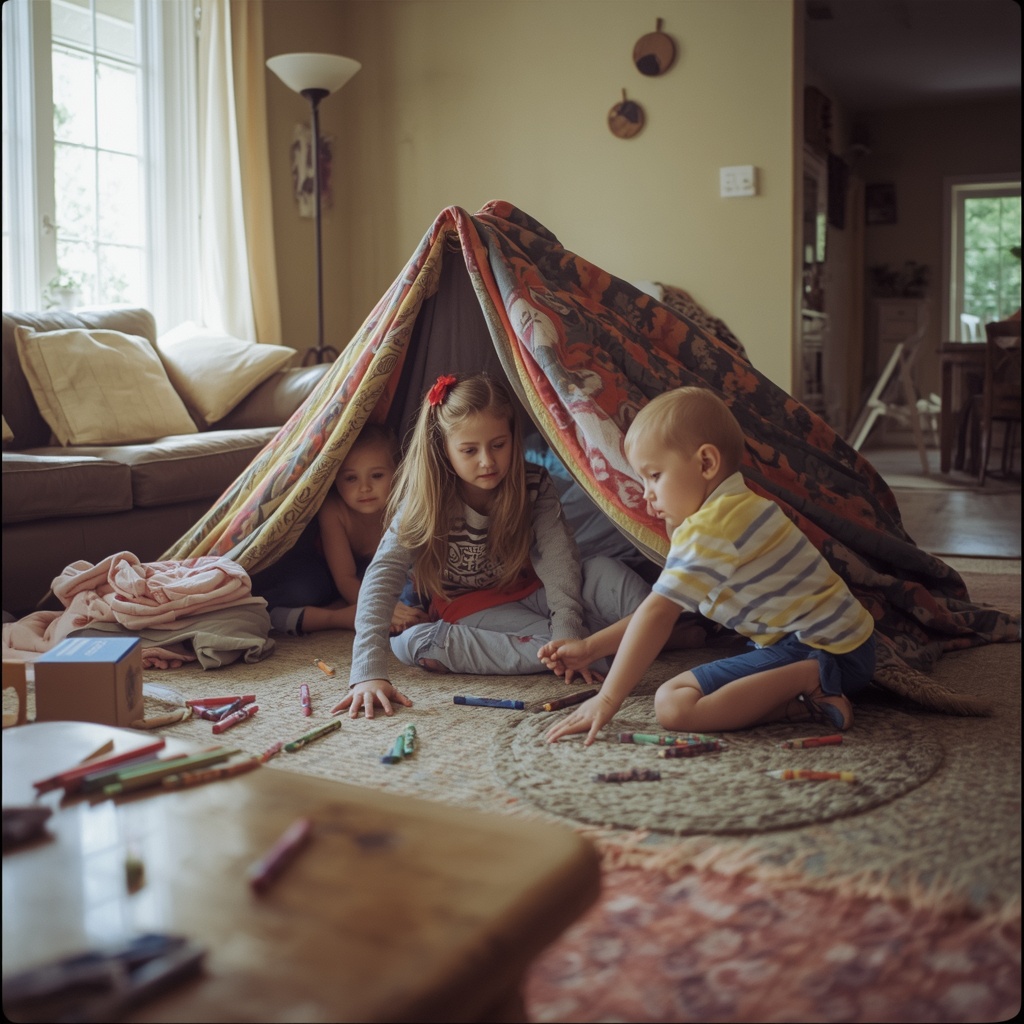
A blanket fort is never just a fort. It becomes a secret base, a spaceship, a reading cave, or a hidden café depending on the day.
Start with chairs, a table, or even the sofa. Drape blankets over them and let kids decide the structure. It doesn’t need to be stable or perfect—part of the fun is constantly adjusting it.
Once the base is built, the real play begins:
- kids bring in toys, books, snacks, or flashlights
- they assign roles (“this is our secret hideout”)
- they may even create “rules” for who can enter
It often lasts much longer than expected because it feels like a world they created themselves.
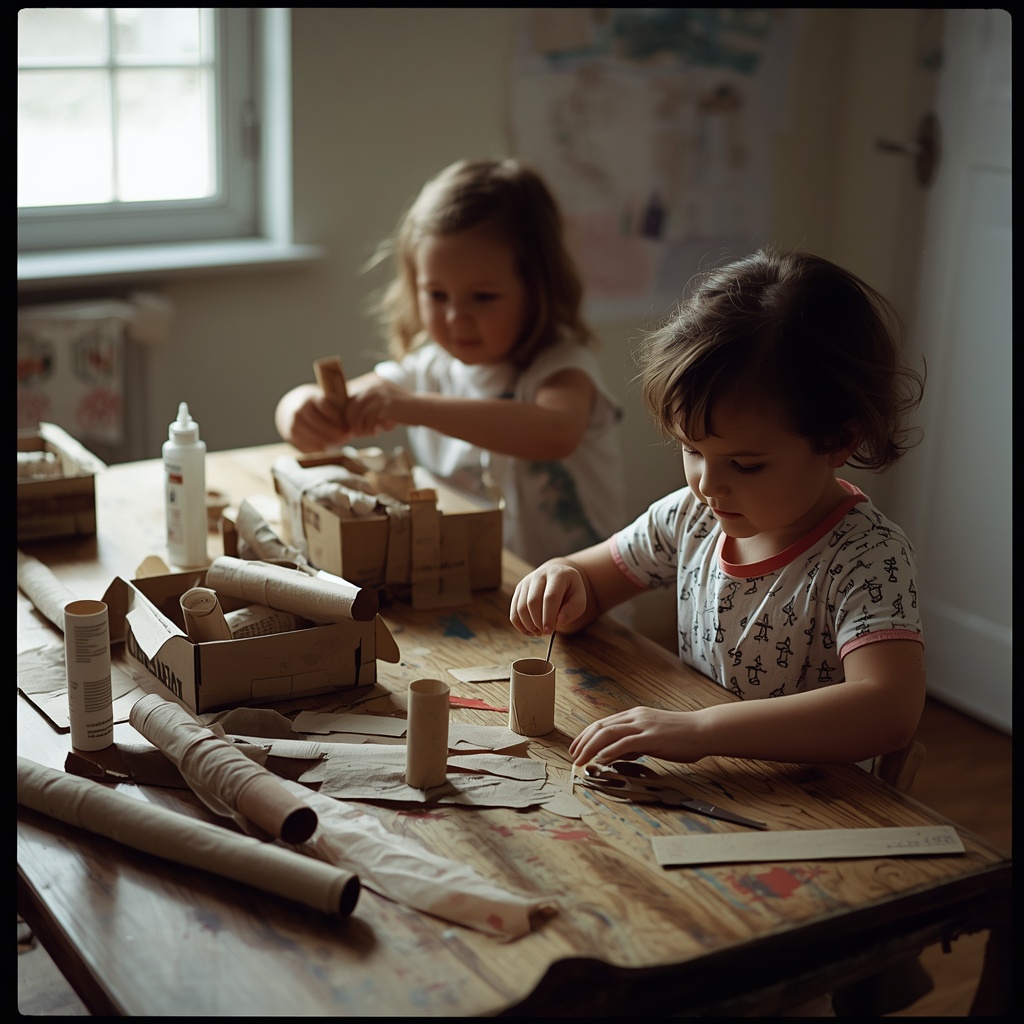
2. Turn a Cardboard Box Into Anything
A cardboard box has no fixed purpose until a child decides what it should be.
Instead of suggesting ideas, simply offer the box and a few basic materials like markers, tape, or old magazines. Then step back.
What often happens:
- a box becomes a car with drawn wheels
- it turns into a rocket with cut-out windows
- it becomes a “shop” where toys are sold
- or simply a hiding space
The key is not helping too much. The transformation process is where imagination builds.
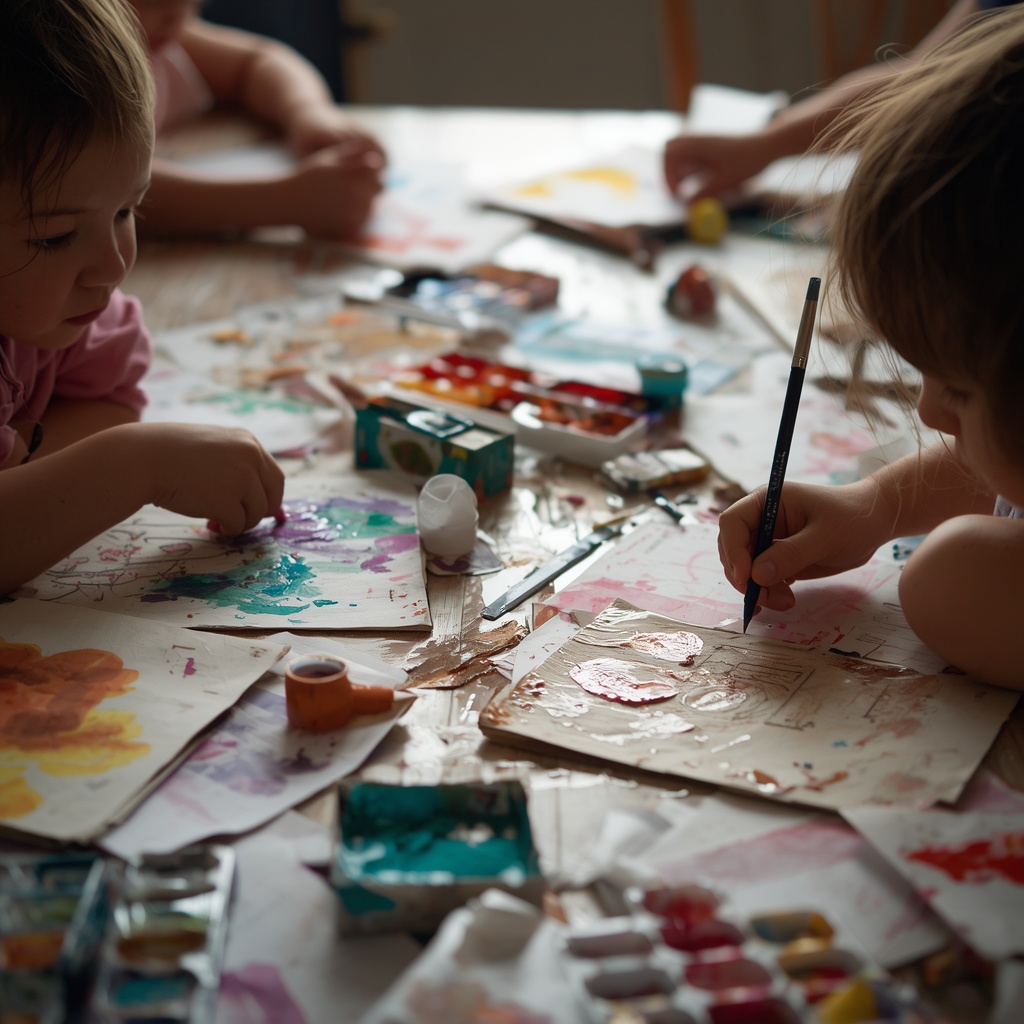
3. Free Drawing Without Rules or Expectations
Set out paper, pencils, crayons, or paints and avoid giving instructions. The goal is not a finished “nice picture,” but exploration.
Children often start with random scribbles and gradually shift into storytelling:
- “This is a monster house”
- “This is a map”
- “This is what my dream looks like”
If you want to extend the activity, you can respond to their drawings by asking questions instead of correcting anything. That keeps creativity flowing.
4. Everyday Objects Become Toys
The kitchen and household are full of “hidden toys.”
Give children permission to explore safely:
- wooden spoons become drumsticks or magic wands
- pots and pans become a drum kit
- laundry baskets become boats, cars, or animal cages
What matters here is not the object itself, but the transformation in their imagination. Often, they start inventing roles and scenarios without any direction.
5. Let Kids Invent Their Own Game
Instead of offering a game, you give them the ingredients for one.
Place out simple materials like paper, dice, blocks, or small toys, and ask:
“What could we play with this?”
At first, they may hesitate—but once they start, they usually create:
- simple board games
- role-based challenges
- rules like “if you land here, you must do this”
This is powerful because it shifts them from “consumer of play” to “creator of play.”
6. Storytelling That Builds Entire Worlds
You don’t need books or scripts—just a starting sentence.
Begin with something open-ended:
- “One morning, the kitchen door opened by itself…”
- “A tiny creature lived inside the wall…”
From there, children usually take over quickly. They might:
- continue the story verbally
- act it out
- draw scenes from it
This activity is especially powerful because it strengthens language, imagination, and emotional expression at the same time.
7. Sock Puppets and Improvised Theater
Old socks, buttons, and markers can turn into characters within minutes.
Kids usually enjoy:
- designing personalities for each puppet
- giving them voices and accents
- creating conflicts or funny conversations
Once the characters exist, a stage appears naturally—behind a sofa, under a table, or inside a fort.
The performance doesn’t need an audience. The process is the entertainment.
8. Nature Treasure Hunt (Even in Small Spaces)
A treasure hunt works anywhere: garden, park, or even a quiet street.
Instead of hiding objects, you create simple observation tasks:
- find something rough
- find something that smells interesting
- find something older than you think
Children start noticing details they would normally ignore. It turns a normal walk into a focused exploration.
9. Indoor Obstacle Course Using Furniture
Living rooms become adventure parks with very little setup.
Use:
- pillows for jumping zones
- chairs for crawling under
- tape lines for balancing paths
Kids usually start improving the course themselves, adding rules or timing challenges. The activity becomes more complex over time without adult input.
10. Simple Kitchen Experiments That Feel Like Magic
You don’t need science kits to make discovery exciting.
Try:
- mixing oil and water to see separation
- watching ice melt in different conditions
- dissolving salt or sugar in water
The key is observation. Ask them what they notice instead of explaining everything immediately. That keeps curiosity active.
11. Toy Washing Station
Fill a bowl or sink with water and give kids sponges, brushes, and a few washable toys.
What looks like “cleaning” quickly turns into play:
- toys get personalities (“this car is very dirty today”)
- washing becomes storytelling
- water play becomes sensory exploration
It’s calming, repetitive, and surprisingly engaging.
12. Everyday Role Play (Real Life Reimagined)
Children naturally copy the adult world—but they change it in their own way.
Common setups:
- restaurant with menus drawn on paper
- doctor’s office with stuffed animals
- supermarket with “products” from the pantry
What makes it powerful is that they control everything: rules, roles, and stories evolve on their own.
13. Kids Create Their Own Puzzles and Challenges
Instead of solving puzzles, they design them.
They might:
- draw mazes for others to solve
- invent riddles
- hide clues around the room
This is especially engaging when siblings or parents join in as “players.”
It turns thinking into play instead of task-solving.
14. Turning Cleanup Into a Game
Tidying up doesn’t need to feel like a chore.
You can transform it into playful structure:
- “Can you find all the blue objects?”
- “Let’s see who can sort the fastest”
- “Can we make the room look like a museum?”
Suddenly, organization becomes part of the game rather than an interruption.
15. Quiet Screen-Free Time Is Also Valuable
Not all boredom needs to be filled with activity.
Sometimes children need:
- time to stare out the window
- quiet reading or picture books
- listening to audio stories
- simply resting without stimulation
This helps them regulate energy and emotions. Calm moments are just as important as active play.
Why This Matters More Than It Seems
Screen-free play isn’t about restriction—it’s about space.
When children aren’t guided by screens:
- they create their own narratives
- they develop independence in play
- they learn to manage boredom
- imagination becomes the main tool, not consumption
And often, the simplest materials create the richest play.
Final Thought
You don’t need to design perfect activities. You just need to leave room for children to transform ordinary things into extraordinary worlds.
A cardboard box, a blanket, or a spoon is often more than enough.