
Early Literacy Skills for Preschoolers: The Complete Guide for Ages 3–5
Discover the essential early literacy skills every preschooler should develop before kindergarten, along with simple, play-based activities that encourage a lifelong love of reading and learning.
Reading Begins Long Before a Child Can Read
When parents think about literacy, they often imagine a child reading their first book or writing their name for the first time.
But literacy begins much earlier.
Long before children can recognize letters or sound out words, they’re developing the skills that make reading possible. Listening to stories, singing nursery rhymes, having conversations, recognizing familiar signs, and pretending to read a favorite book are all important parts of early literacy.
These experiences build the foundation children need to become confident readers and writers later on.
The best part?
You don’t need expensive educational toys or formal lessons. Most early literacy skills develop naturally through everyday conversations, books, songs, and play.
In this complete guide, you’ll learn:
- what early literacy really means
- why these skills matter before kindergarten
- the most important literacy skills preschoolers develop
- fun, hands-on activities you can do at home
- simple ways to encourage a love of books every day
What Are Early Literacy Skills?
Early literacy refers to the knowledge, skills, and attitudes children develop before they learn to read and write independently.
Think of these skills as building blocks.
Just as children need strong muscles before they learn to ride a bicycle, they need strong language and literacy skills before they become successful readers.
Early literacy isn’t about teaching a three-year-old to read.
It’s about helping children:
- enjoy books
- communicate confidently
- recognize letters
- hear sounds in words
- understand that print has meaning
- develop curiosity about language
Children who experience rich language and literacy opportunities during the preschool years often enter kindergarten with greater confidence and stronger learning skills.
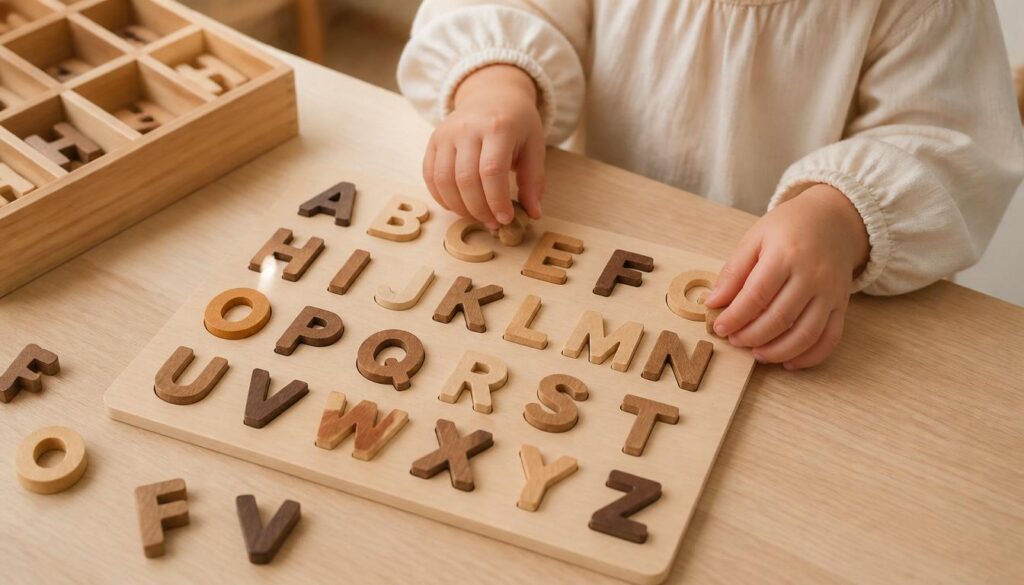
Why Early Literacy Matters
Reading isn’t just another school subject.
It’s the foundation for learning almost everything else.
Children who develop strong early literacy skills often find it easier to:
- understand instructions
- express their thoughts
- ask questions
- solve problems
- build friendships
- develop imagination
- learn new vocabulary
- enjoy books independently later on
Reading together also strengthens the bond between parent and child.
Even just 15 minutes of shared reading each day can have a meaningful impact on language development.
Most importantly, early literacy should always feel joyful.
Children who associate books with comfort, fun, and connection are much more likely to become lifelong readers.
Early Literacy Milestones by Age
Every child develops at their own pace.
These milestones are only general guidelines.
| Age | Typical Early Literacy Skills |
|---|---|
| 3 Years | Enjoys listening to stories, recognizes favorite books, joins in songs and rhymes, begins pretending to read. |
| 4 Years | Recognizes some letters, notices rhyming words, retells simple stories, understands that print carries meaning. |
| 5 Years | Recognizes many letters, identifies beginning sounds, understands story structure, writes some letters, recognizes their own name. |
Remember that children don’t all reach milestones at the same time.
The goal is progress—not perfection.
The Essential Early Literacy Skills
Early literacy isn’t one single skill.
It includes many different abilities that work together.
The most important ones are:
| Skill | Why It Matters |
|---|---|
| Letter Recognition | Helps children identify letters before reading. |
| Print Awareness | Teaches that books and print have meaning. |
| Phonological Awareness | Helps children hear and play with sounds in language. |
| Vocabulary | Expands understanding and communication. |
| Oral Language | Builds speaking and conversation skills. |
| Listening Comprehension | Helps children understand stories and instructions. |
| Storytelling | Encourages sequencing and imagination. |
| Name Recognition | Often a child’s first meaningful word. |
Let’s explore each one in more detail.
1. Letter Recognition
One of the first literacy skills preschoolers begin developing is recognizing letters.
Children don’t need to memorize the entire alphabet overnight.
Instead, they gradually become familiar with the shapes and names of letters through everyday experiences.
Many children first recognize the letters in their own name because those letters are meaningful to them.
As they grow, they begin noticing letters on signs, cereal boxes, books, clothing, and toys.
The goal isn’t memorization.
It’s familiarity.
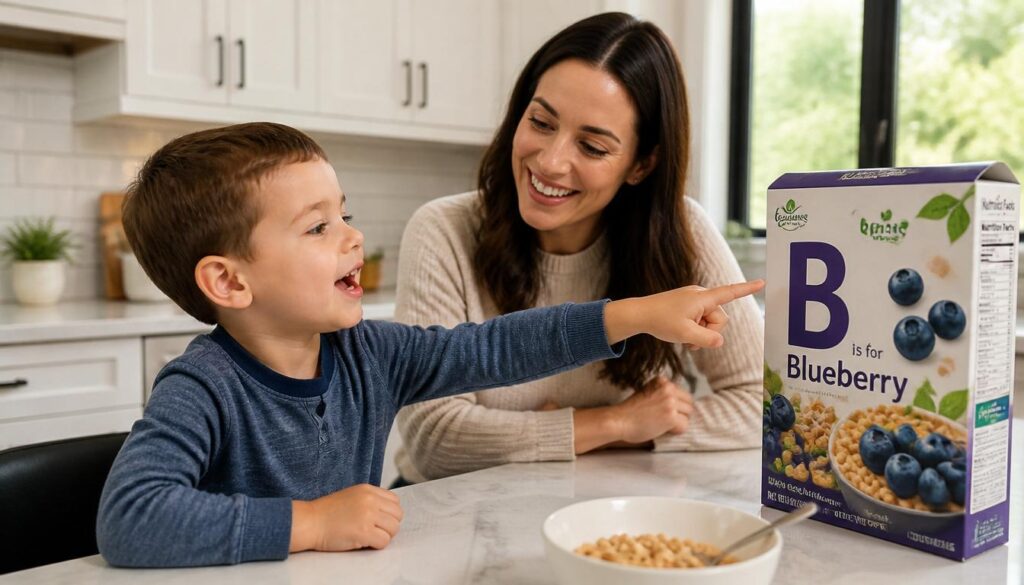
Why This Skill Matters
Recognizing letters helps children understand that written symbols represent language.
Later, they’ll connect those letters with sounds, making reading much easier.
Fun Letter Recognition Activities
Alphabet Scavenger Hunt
Choose one letter of the day.
Can your child find that letter around the house?
Look for it on:
- cereal boxes
- books
- food packaging
- calendars
- clothing labels
- street signs during a walk
Children quickly realize that letters are everywhere.
Magnetic Letter Match
Using magnetic letters on the refrigerator, ask your child to find:
- the first letter of their name
- the first letter of Mom or Dad’s name
- letters that appear in favorite books
Keep it playful rather than turning it into a test.
Letter Parking Lot
Draw parking spaces on paper.
Write one letter inside each parking space.
Label toy cars with matching letters using small stickers.
Can your child park each car in the correct space?
This simple game combines movement, matching, and letter recognition.
Alphabet Sensory Tray
Fill a tray with rice, dried beans, or kinetic sand.
Hide foam or magnetic letters inside.
Invite your child to dig for letters and name each one they discover.
You can also ask:
„Can you find the letter B?“
Sensory play makes learning memorable.
Build Letters with Playdough
Roll playdough into long „snakes.“
Use them to build letters together.
Children often remember letter shapes better when they create them with their hands.
Parent Tip
💡 Start with the letters in your child’s name.
Children are naturally interested in their own name, making these letters much easier to remember than random ones.
2. Print Awareness
Print awareness means understanding that printed words carry meaning.
Before children learn to read, they begin noticing how books work.
They discover:
- books have a front and back cover
- pages turn from left to right (in English)
- words tell a story
- spaces separate words
- signs and labels communicate information
These may seem like small observations, but they’re essential building blocks for future reading.
⭐ Why This Skill Matters
Children who understand how books and print work are better prepared when they begin learning to read in school.
Print Awareness Activities
Point to the Words While Reading
As you read aloud, gently slide your finger under the words.
This helps children understand that the spoken words match the printed text.
Don’t do it constantly—just occasionally to build awareness.
Book Detective
Before reading, ask questions such as:
- Can you find the title?
- Where is the author’s name?
- Which way do we open the book?
- Where should we start reading?
Children love becoming „book detectives.“
Environmental Print Hunt
Look for print everywhere.
Examples include:
- stop signs
- restaurant logos
- grocery labels
- road signs
- birthday cards
- menus
Children often recognize familiar logos long before they can read the words.
This is an important step in literacy development.
Reading Together
Encourage your child to „read“ familiar books from memory.
Even if they aren’t decoding the words yet, retelling the story while turning the pages builds confidence and narrative skills.
Praise their storytelling instead of correcting them.
Create a Reading Corner
You don’t need a large space.
A small basket of books, a cozy blanket, and a few pillows can create an inviting reading area that encourages children to choose books independently.
The more accessible books are, the more likely children are to explore them.
3. Phonological Awareness
One of the strongest predictors of future reading success isn’t knowing the alphabet—it’s phonological awareness.
Although the name sounds complicated, the concept is actually quite simple.
Phonological awareness is a child’s ability to hear, recognize, and play with the sounds in spoken language.
Before children can connect letters to sounds, they first need to notice that words are made up of smaller sound units.
For example, they begin to realize that:
- cat and hat rhyme.
- sun starts with the /s/ sound.
- banana has three parts (syllables).
- Some words are longer than others.
The important thing to remember is that phonological awareness is about listening—not reading.
Children don’t need to see any letters to practice this skill.
⭐ Why This Skill Matters
Strong phonological awareness makes it much easier for children to learn phonics and decoding later on.
In fact, many reading specialists consider it one of the most important preschool literacy skills.
The best part?
Children can practice it anywhere—during a walk, in the car, or while playing.
Phonological Awareness Activities
Rhyming Basket
Fill a basket with small household objects.
Examples:
- sock
- rock
- hat
- cat (toy)
- key
- bee (toy)
Ask:
„Can you find two things that rhyme?“
Don’t worry if your child doesn’t know the answer.
Model it first.
Silly Rhyming Game
Take turns making silly rhymes.
Examples:
Cat…
Hat…
Bat…
Pat…
Even nonsense words are wonderful.
Children enjoy saying things like:
„lat“
„zat“
„baf.“
Playing with sounds is the goal.
Sound Detective
Choose one sound.
For example:
/m/
Then search the house together.
Can you find something that starts with the /m/ sound?
Milk
Mirror
Marker
Monkey
Children quickly become little detectives.
Mystery Sound
Say a word very slowly.
„C…a…t.“
Ask:
„Can you guess my word?“
Once children understand the game, let them create mystery words for you.
I Hear…
Instead of saying:
„I spy…“
Try:
„I hear something that starts with the /b/ sound.“
Children look for:
Book
Ball
Banana
Bottle
4. Rhyming
Rhyming deserves its own section because it’s such an enjoyable way to build early literacy skills.
When children hear words that sound alike, they begin paying attention to language in a completely new way.
Rhyming strengthens listening, memory, and sound awareness.
Rhyming Activities
Nursery Rhymes
Classic nursery rhymes are wonderful because they naturally repeat sounds.
Read them slowly.
Pause before the rhyming word.
For example:
„Twinkle, twinkle little…“
Allow your child to finish the sentence.
Rhyming Picture Match
Print or draw simple pictures.
Examples:
Cat
Hat
Tree
Bee
Dog
Log
Mix them together.
Can your child find the matching rhyming pairs?
Finish the Rhyme
Start a sentence.
„The mouse lives in a…“
House.
Or ask:
„What rhymes with tree?“
Celebrate every answer—even funny ones.
Rhyming Books
Some wonderful books include:
- Llama Llama Red Pajama
- Room on the Broom
- Each Peach Pear Plum
- Fox in Socks
Children naturally begin predicting rhyming words after hearing these books several times.
Parent Tip
💡 Don’t correct every mistake.
If your child says that dog rhymes with duck, simply smile and say:
„Those words start with the same sound, but they don’t rhyme. Let’s try another one together.“
Keeping the activity playful is much more important than getting every answer right.
5. Beginning Sounds
Once children begin hearing sounds in words, they can start noticing which sound comes first.
This skill helps prepare children for phonics instruction later on.
Remember that we’re listening to sounds, not naming letters.
For example:
Apple starts with the /a/ sound.
Sun starts with the /s/ sound.
Beginning Sound Activities
Sound Sorting
Gather small objects.
Examples:
Apple
Ball
Car
Duck
Place them into groups according to their beginning sound.
What’s in the Bag?
Fill a small bag with familiar objects.
Pull one out.
Ask:
„What sound do you hear at the beginning of ball?“
Sound Walk
During a walk, challenge your child to find:
Something starting with /t/.
Something starting with /b/.
Something starting with /p/.
You’ll be surprised how much children enjoy this challenge.
Alphabet Sound Basket
Choose one sound each week.
Fill a basket with objects beginning with that sound.
For /m/, you could include:
- marker
- marble
- monkey
- mitten
- map
6. Vocabulary Development
Vocabulary is much more than knowing lots of words.
It’s about understanding what words mean and knowing when to use them.
Children with strong vocabularies often understand stories more easily and find it easier to express themselves.
Fortunately, vocabulary grows naturally through conversation.
Vocabulary Activities
Describe It
Choose an object.
Ask questions like:
What color is it?
How does it feel?
Is it heavy or light?
What does it smell like?
Can you think of another word for it?
Category Challenge
Choose a category.
For example:
Animals
Food
Things that fly
Things in the kitchen
Take turns naming as many as possible.
Nature Walk Vocabulary
Instead of simply saying:
„Look at the flower.“
Try:
„This flower has soft petals.“
„The bark feels rough.“
„The leaves are smooth.“
Using rich language naturally expands vocabulary.
Read and Talk
When reading together, stop occasionally and ask:
„What do you think this word means?“
Or explain new words in simple language.
Children learn hundreds of new words through shared reading.
7. Oral Language
Long before children learn to read, they learn to communicate.
Conversation builds grammar, vocabulary, confidence, and comprehension.
The more children talk, the more opportunities they have to organize their thoughts and develop language.
Oral Language Activities
Open-Ended Questions
Instead of asking:
„Did you have fun?“
Try asking:
„What was your favorite part?“
„What made you laugh today?“
„What do you think will happen next?“
These questions encourage longer conversations.
Pretend Play
Pretend play naturally develops language.
Set up:
- a grocery store
- a doctor’s office
- a restaurant
- a post office
Take turns being the customer and the shopkeeper.
Finish the Story
Start with:
„Once there was a little rabbit who…“
Then let your child continue.
You can take turns adding one sentence at a time.
Puppet Conversations
Even shy children often become very talkative when using puppets or stuffed animals.
Encourage simple conversations between the characters.
8. Listening Skills
Listening is an often-overlooked literacy skill.
Children need to listen carefully before they can understand stories, follow directions, or participate in conversations.
Strong listening skills also support attention, memory, and comprehension.
Listening Activities
Simon Says
A classic game that helps children listen carefully before acting.
Listening Walk
Go outside without talking for one minute.
Afterwards, ask:
„What sounds did you hear?“
Birds?
Cars?
The wind?
A dog barking?
This activity encourages careful listening.
Follow the Directions
Give two-step directions.
For example:
„Touch your nose and then clap your hands.“
As your child becomes more confident, make the instructions a little longer.
Read Aloud Together
Reading aloud every day remains one of the most powerful ways to strengthen listening comprehension.
Pause occasionally to ask:
- What happened first?
- Why do you think the character did that?
- What do you think will happen next?
These simple questions help children think about the story instead of only listening to the words.
9. Storytelling
Long before children learn to write stories, they learn how stories work.
Storytelling helps children develop:
- imagination
- sequencing skills
- vocabulary
- memory
- communication
- comprehension
When children tell stories, they’re learning to organize their thoughts and express ideas clearly.
There is no „right“ or „wrong“ story.
The goal is creativity and confidence.
⭐ Why This Skill Matters
Children who can retell stories and describe events often find reading comprehension easier later on.
Storytelling also encourages creativity and strengthens oral language.
Storytelling Activities
Picture Story Cards
Print or draw three to five simple pictures.
For example:
- a little bird
- a tree
- a rain cloud
- a rainbow
- a nest
Ask your child:
„Can you make up a story using these pictures?“
Every story will be different—and that’s the fun!
Story Basket
Fill a basket with random objects such as:
- a toy dinosaur
- a spoon
- a small boat
- a flower
- a teddy bear
Pick three objects.
Challenge your child to include all three in one story.
Finish the Story
Begin with an opening sentence.
„One sunny morning, a tiny mouse found a mysterious box…“
Then let your child decide what happens next.
Take turns adding one sentence at a time.
Puppet Theater
Use stuffed animals or finger puppets to create simple stories.
Children often feel more confident speaking through a puppet than speaking directly.
Family Story Time
Ask questions like:
- What was your favorite part of today?
- What happened first?
- What happened after that?
- What was the funniest moment?
Talking about everyday experiences also builds storytelling skills.
10. Name Recognition
For many preschoolers, their own name is the very first meaningful word they recognize.
That’s why it’s the perfect place to begin introducing letters and print.
Instead of starting with the entire alphabet, begin with something that already matters to your child—their name.
⭐ Why This Skill Matters
Recognizing their own name helps children understand that print has meaning.
It also builds confidence because children quickly experience success.
Many children recognize their name before they recognize any other word.
Name Recognition Activities
Name Puzzle
Write your child’s name on a piece of cardstock.
Cut between each letter.
Can your child put the puzzle back together?
Build My Name
Use:
- magnetic letters
- letter beads
- foam letters
- wooden alphabet pieces
Invite your child to build their name.
Name Hunt
Write your child’s name several times on a sheet of paper.
Add a few other names.
Can they find their own?
Trace and Decorate
Write your child’s name in large letters.
Invite them to trace it with:
- crayons
- stickers
- fingerprints
- paint
- playdough
Building Literacy Throughout the Day
One of the biggest misconceptions about early literacy is that it requires formal lessons.
In reality, children learn best through small, meaningful moments woven into everyday life.
Here are a few easy ways to encourage literacy throughout the day.
During Breakfast
Talk about the food you’re eating.
Ask questions like:
- Which fruit is bigger?
- What color is your banana?
- What sound does „banana“ begin with?
At the Grocery Store
Invite your child to:
- find the letter B on a cereal box
- recognize familiar logos
- help read simple signs
- name fruits and vegetables
- compare package sizes
In the Car
Play simple language games.
Examples:
- I Spy
- Rhyming words
- Find something that starts with /m/
- Finish the sentence
During a Walk
Talk about what you see.
Introduce new vocabulary.
Ask open-ended questions.
Point out signs, numbers, and letters.
Before Bed
Reading together remains one of the most valuable literacy activities.
Even ten minutes each evening can help children:
- expand vocabulary
- strengthen listening skills
- develop imagination
- build positive associations with books
Recommended Children’s Books
Reading aloud is one of the best ways to support every early literacy skill.
Here are a few timeless favorites.
Letter Recognition
- Chicka Chicka Boom Boom by Bill Martin Jr. & John Archambault
- Dr. Seuss’s ABC
- Eating the Alphabet by Lois Ehlert
Rhyming
- Llama Llama Red Pajama by Anna Dewdney
- Room on the Broom by Julia Donaldson
- Each Peach Pear Plum by Janet and Allan Ahlberg
Vocabulary
- Brown Bear, Brown Bear, What Do You See? by Bill Martin Jr.
- The Very Hungry Caterpillar by Eric Carle
- We’re Going on a Bear Hunt by Michael Rosen
Storytelling
- The Gruffalo by Julia Donaldson
- Not a Box by Antoinette Portis
- Where the Wild Things Are by Maurice Sendak
Common Mistakes Parents Make
Focusing Only on the Alphabet
Learning the alphabet is important, but it’s only one part of early literacy.
Children also need rich conversations, storytelling, rhyming, and shared reading experiences.
Correcting Every Mistake
When children feel pressured to be perfect, they may lose confidence.
Celebrate effort.
Learning should feel encouraging—not stressful.
Reading Too Quickly
Slow down.
Talk about the pictures.
Ask questions.
Let your child predict what might happen next.
Reading together is about conversation, not simply finishing the book.
Turning Reading Into a Lesson
Books should be enjoyable.
Sometimes it’s enough to cuddle together and enjoy the story.
Not every page needs a question or a teaching moment.
Comparing Children
Every child develops differently.
Some children recognize letters at three.
Others become interested closer to kindergarten.
Both paths can be perfectly normal.
Frequently Asked Questions
Should my preschooler know the alphabet before kindergarten?
Many children recognize several letters before kindergarten, but there is no need to rush.
A love of books, strong language skills, and curiosity are just as important.
Should I teach uppercase or lowercase letters first?
Many parents begin with uppercase letters because they are visually simpler.
However, children will eventually need to recognize both.
Starting with the letters in your child’s name is often the most meaningful approach.
How long should I read with my preschooler each day?
Aim for 10–20 minutes of shared reading each day.
Consistency matters more than length.
Even a short story every evening can have a lasting impact.
My child isn’t interested in books. What should I do?
Follow your child’s interests.
Choose books about dinosaurs, trucks, animals, princesses, space, or anything else they love.
Make reading cozy and enjoyable rather than something they „have to do.“
Graphic books, lift-the-flap books, and interactive stories can also capture reluctant readers.
Does my child need worksheets?
Not at all.
Young children learn best through conversation, play, singing, storytelling, and shared reading.
Worksheets can be a fun addition, but they should never replace meaningful interactions.
Final Thoughts
Early literacy isn’t about teaching children to read as quickly as possible.
It’s about creating joyful experiences with language.
Every conversation, bedtime story, nursery rhyme, and pretend play adventure helps children build the skills they’ll use for the rest of their lives.
Remember, your child doesn’t need expensive educational programs or hours of structured lessons.
What they need most is you.
By reading together, asking questions, singing songs, and making time for playful conversations, you’re laying the foundation for confident reading, writing, and lifelong learning.
So don’t worry about teaching everything perfectly.
Instead, focus on making books, words, and stories a natural and enjoyable part of everyday life.
Those small moments will add up to something truly meaningful.